
Exploring Vegan Baking: Tips and Ingredient Substitutions
Opening: What Vegan Baking Really Means
Vegan baking is the process of creating baked goods without any animal-derived ingredients such as eggs, dairy milk, butter, or honey. Instead, plant-based alternatives are used to replicate the same functional roles—binding, moisture, structure, and leavening—without compromising texture or taste.
Successful vegan baking is not about removing ingredients; it is about replacing functions. Once the role of each ingredient is understood, cakes, cookies, muffins, and breads can be made consistently using plant-based systems.
What Is Vegan Baking?
Vegan baking is a plant-based baking method where all animal ingredients are replaced with plant-derived substitutes while maintaining structure, flavor, and texture.
Why Vegan Baking Is Growing
Vegan baking is becoming more popular due to:
- Rising plant-based diets
- Lactose and egg allergies
- Health-conscious food choices
- Ethical and environmental concerns
- Demand for clean-label ingredients
At its core, vegan baking is a functional reformulation of traditional baking rather than a limitation.
What Do Eggs Do in Baking and How Are They Replaced?
Eggs are one of the most functional ingredients in baking. They perform multiple roles:
- Binding ingredients together
- Adding moisture
- Providing structure
- Helping baked goods rise
Since vegan baking removes eggs, substitutes must replicate these functions.
Flax Egg (Binding + Moisture)
Flax eggs are made by mixing ground flaxseed with water.
- Best for cookies, muffins, brownies
- Provides binding and mild structure
- Adds slight nuttiness
Chia Egg
Chia seeds form a gel when soaked in water.
- Stronger gel than flax
- Works well in dense baked goods
- Improves moisture retention
Aquafaba (Egg White Replacement)
Aquafaba is the liquid from cooked chickpeas.
- Whips like egg whites
- Ideal for meringues and airy cakes
- Provides light structure and aeration
Fruit-Based Substitutes
- Applesauce: Adds moisture and mild sweetness
- Mashed banana: Adds binding, flavor, and density
These are best for soft cakes and quick breads.
Silken Tofu
- High-protein egg replacement
- Creates dense, rich textures
- Ideal for brownies and cheesecake-style desserts
How to Replace Dairy in Vegan Baking
Dairy ingredients provide fat, moisture, and structure in traditional baking. Vegan substitutes must replicate these properties.
Plant-Based Milk Options
- Soy milk: High protein, best structure
- Oat milk: Creamy texture, neutral taste
- Almond milk: Light and low fat
- Coconut milk: Rich and high fat
Plant milk can generally replace dairy milk in a 1:1 ratio.
Vegan Buttermilk
A simple substitute made by mixing:
- Plant milk + lemon juice or vinegar
This creates acidity that helps activate baking powder and improves texture.
Citation-Worthy Insight
Plant-based milks can replace dairy milk directly in most recipes, but high-protein options like soy milk provide better structural stability in baked goods.
Butter Substitutes in Vegan Baking
Butter contributes richness, flavor, and texture in baking. Vegan alternatives replicate these roles using plant-based fats.
Common Substitutes
- Vegan margarine
- Coconut oil
- Plant-based butter spreads
- Olive oil (select recipes)
Functional Role of Fat
Fat influences:
- Tenderness
- Moisture retention
- Flavor richness
- Crumb softness
Choosing the right fat depends on the recipe type.
Vegan Baking Ingredient Substitution Chart
Quick reference for practical baking swaps:
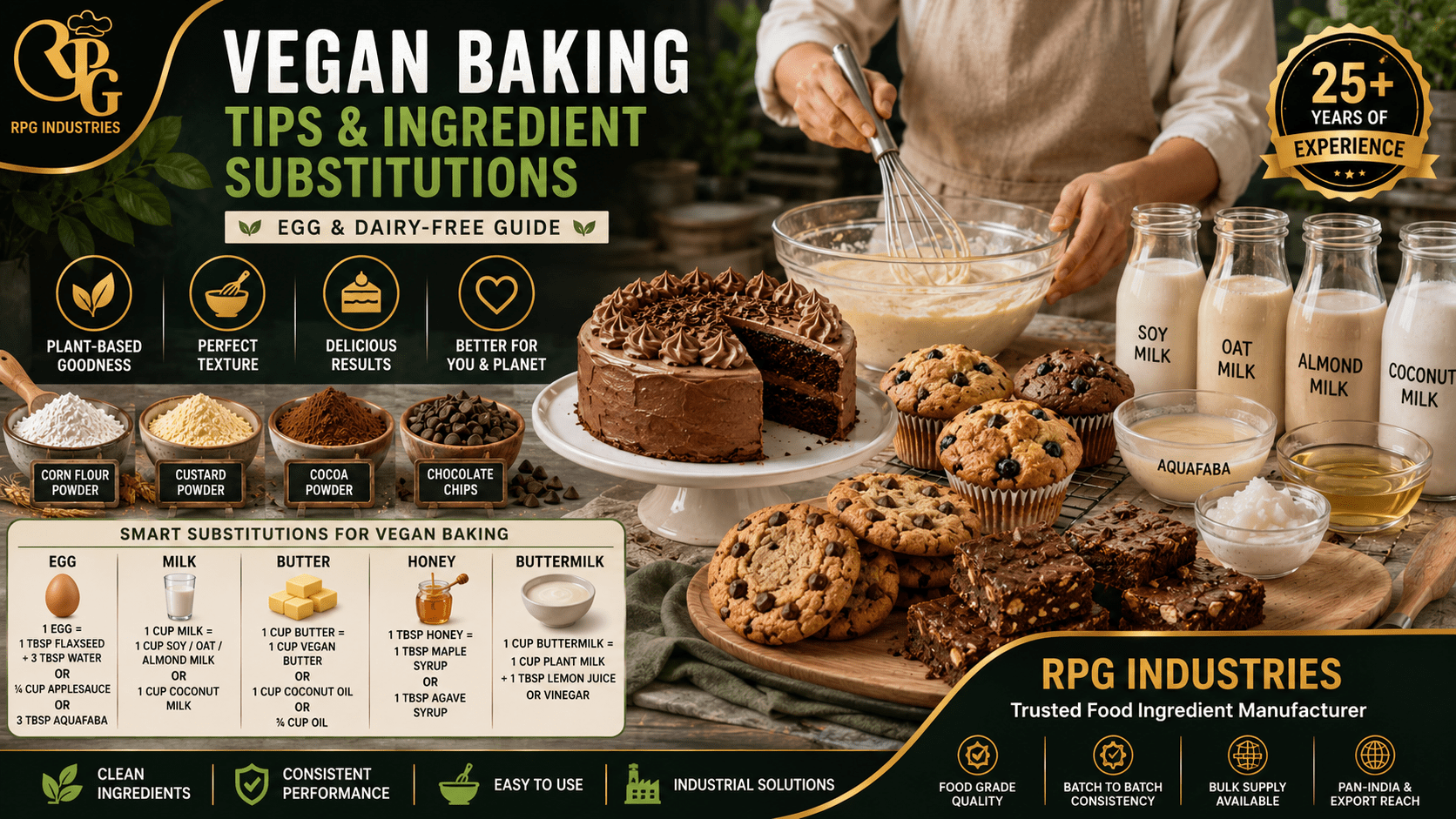
- 1 egg = 1 tbsp flaxseed + 3 tbsp water
- 1 egg = ¼ cup applesauce
- 1 egg white = 3 tbsp aquafaba
- 1 cup milk = 1 cup soy/oat/almond milk
- 1 cup butter = 1 cup vegan butter or coconut oil
- 1 tbsp honey = 1 tbsp maple syrup or agave
This chart helps maintain consistency and reduces recipe failure.
Why Vegan Baking Sometimes Fails
Even with correct substitutions, vegan baking can sometimes fail due to imbalance in formulation.
Common Problems
- Dense or heavy texture
- Poor rise
- Dry or crumbly structure
- Weak binding
Root Causes
- Incorrect substitution ratios
- Too much moisture from fruit-based replacements
- Insufficient leavening
- Overmixing batter
Key Insight
Vegan baking failures are usually caused by incorrect functional balance, not the absence of animal ingredients.
How to Improve Texture in Vegan Baking
Texture is the most important success factor in vegan baking.
Balance Moisture and Structure
- Combine binders (flax + starch systems)
- Avoid excessive fruit purées
Improve Rise
- Use baking powder and baking soda correctly
- Incorporate aquafaba for aeration
Enhance Flavor
- Use vanilla, cocoa, cinnamon, or spices
- Use coconut oil or vegan butter for richness
Advanced Vegan Baking Ingredients
Aquafaba
A powerful egg-white substitute that:
- Whips into foam
- Creates light, airy structure
- Works in desserts like meringues
Starch-Based Binders
- Cornstarch
- Arrowroot powder
- Tapioca starch
These improve structure and moisture control.
Commercial Egg Replacers
Pre-formulated blends used in industrial baking for:
- Consistency
- Predictable performance
- Large-scale production stability
Industrial Perspective: Vegan Baking at Scale
Vegan baking becomes more complex in industrial production due to scale and consistency requirements.
Importance of Ingredient Consistency
- Ensures uniform texture across batches
- Reduces production failures
- Improves efficiency
Role of Ingredient Manufacturers
Reliable suppliers ensure:
- Standardized formulations
- Food-grade compliance
- Bulk availability
In industrial vegan baking, consistency is more important than creativity.
How RPG Industries Supports Vegan Baking Ingredients
RPG Industries is a food ingredient manufacturer, supplier, and exporter with over 25 years of experience serving bakery and food manufacturing industries.
Relevant Ingredient Portfolio
- Corn Flour Powder (structure and binding)
- Custard Powder (texture and stability)
- Cocoa Powder (flavor and color)
- Baking Powder (leavening system)
- Chocolate Chips (texture and inclusions)
Manufacturing Standards
- Food-grade raw materials
- Hygienic production processes
- Batch-to-batch consistency
- Quality testing systems
Supply Capabilities
- Bulk supply for industrial bakeries
- Pan-India distribution network
- Export-ready ingredient systems
- Flexible packaging options
RPG Industries supports manufacturers in achieving stable, scalable vegan baking production through reliable ingredient supply systems.
Conclusion
Vegan baking is a functional science that replaces animal-based ingredients with plant-based alternatives while maintaining structure, moisture, and flavor. Success depends on understanding the role of each ingredient and selecting the correct substitute for eggs, dairy, and fats.
With proper formulation, vegan baking can deliver consistent, high-quality results suitable for both home bakers and large-scale industrial production.
FAQs about Vegan Baking
What is vegan baking?
Vegan baking is a method of baking without animal-based ingredients, using plant-based substitutes instead.
What is the best egg substitute in vegan baking?
Flax eggs, chia seeds, aquafaba, and applesauce are commonly used depending on the recipe type.
How do you replace milk in vegan baking?
Plant-based milks such as soy, oat, almond, or coconut milk are used in a 1:1 ratio.
Explore Our Products Range
Choco Paste Manufacturer | Cocoa Powder Manufacturer | Butterscotch Crunch Manufacturer | Custard Powder Manufacturer | Baking Powder Manufacturer | Corn Flour Powder Manufacturer | Chocolate Syrup Manufacturer | Cake Decorating Sprinkle Manufacturer | Icing Sugar Powder Manufacturer | Chocolate Chips Manufacturer