
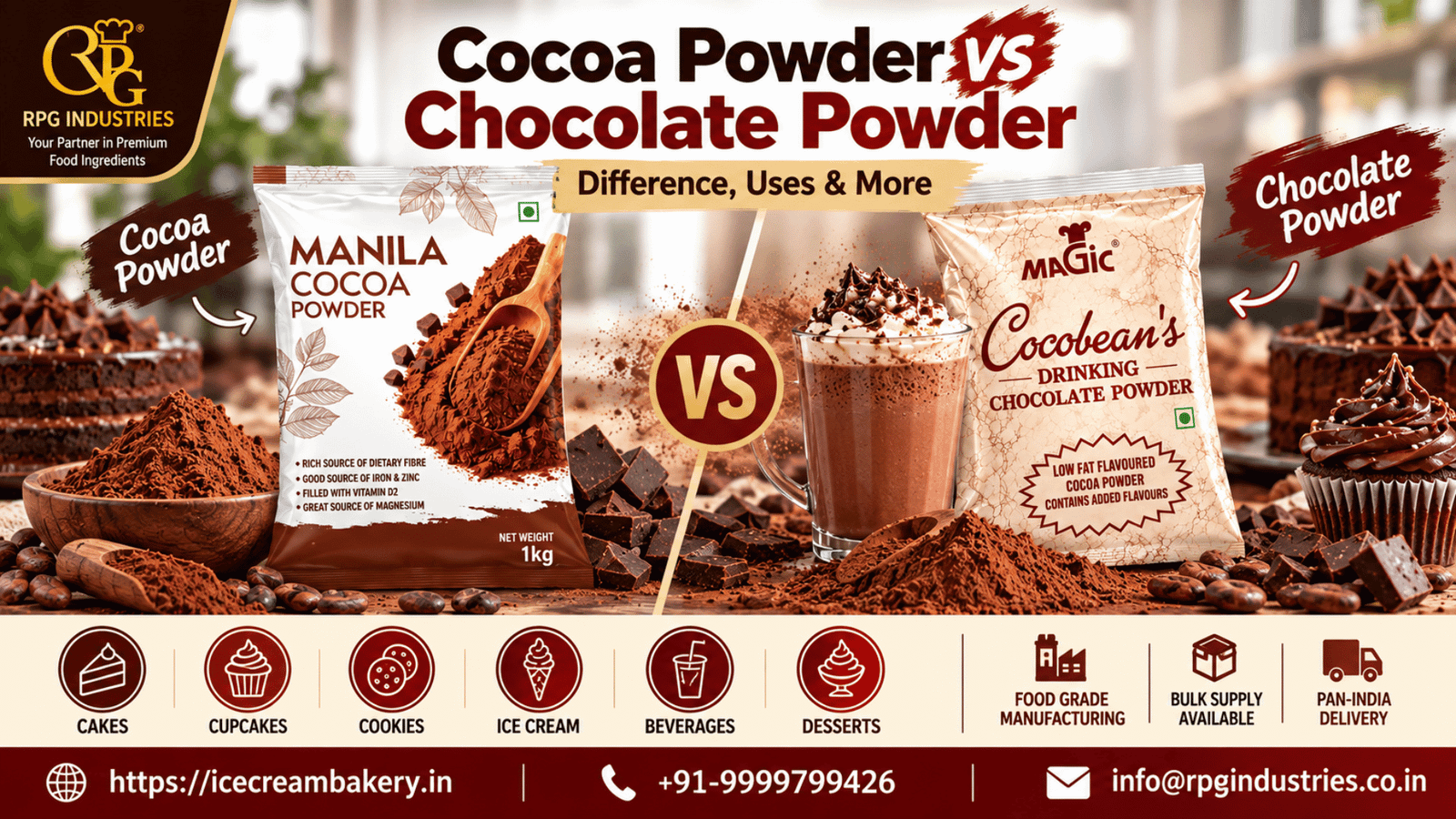
Cocoa Powder vs Chocolate Powder: What’s the Difference?
Cocoa powder and chocolate powder are not necessarily the same product. Cocoa powder is primarily a cocoa-derived ingredient, while chocolate powder is a broader term that may refer to a formulated powder containing cocoa along with ingredients such as sugar, milk solids, or flavouring. The exact composition varies by product.
The difference matters when choosing ingredients for commercial baking, beverages, desserts, ice cream, confectionery, and food manufacturing because the two powders can differ in sweetness, cocoa intensity, formulation, and application.
What Is the Difference Between Cocoa Powder and Chocolate Powder?
The main difference between cocoa powder and chocolate powder is their composition and intended use.
Cocoa powder is primarily made from cocoa solids and is generally unsweetened. Chocolate powder may contain cocoa along with sugar, milk solids, flavouring, or other ingredients, depending on the formulation.
| Factor | Cocoa Powder | Chocolate Powder |
| Main ingredient | Cocoa solids | Cocoa plus other ingredients, depending on formulation |
| Sugar | Usually unsweetened | May contain sugar |
| Flavour | Strong, direct cocoa flavour | May have a sweeter chocolate flavour |
| Formulation | Relatively simple | Can be a multi-ingredient formulation |
| Recipe control | High control over sweetness | Depends on the formulation |
| Common applications | Baking, beverages, desserts, ice cream | Beverages, desserts and formulated food applications |
| Commercial use | Bakery and food manufacturing | Beverage and formulated food applications |
Important: “Chocolate powder” is not one standardized formulation. Always check the ingredient declaration and technical specification before using it as a substitute for cocoa powder.
What Is Cocoa Powder?
Cocoa powder is a dry cocoa ingredient produced by processing cocoa beans and separating much of the cocoa butter from the resulting cocoa mass. The remaining cocoa solids are processed into powder.
Cocoa powder is widely used because it provides concentrated cocoa flavour, colour, and aroma without adding the same amount of cocoa butter found in chocolate.
Common types include:
- Natural cocoa powder
- Alkalised cocoa powder
- Dark cocoa powder
- Cocoa powder with different fat specifications
Where Is Cocoa Powder Used?
Cocoa powder is commonly used in:
- Cakes
- Brownies
- Cookies
- Biscuits
- Bakery premixes
- Chocolate desserts
- Ice cream
- Milkshakes
- Hot beverages
- Confectionery products
- Food manufacturing
For commercial bakeries, cocoa powder can provide greater control over the cocoa flavour, colour, sweetness, and overall recipe formulation.
What Is Chocolate Powder?
Chocolate powder is a broader term used for powdered chocolate-flavoured formulations. Depending on the product, it can contain cocoa or cocoa solids together with ingredients such as sugar, milk solids, flavouring, or other formulation components.
Because formulations vary between manufacturers, chocolate powder should not be treated as a single standardized ingredient.
Where Is Chocolate Powder Used?
Chocolate powder may be used in:
- Hot chocolate
- Chocolate beverages
- Milkshakes
- Dessert preparations
- Bakery products
- Premixes
- Foodservice applications
- Commercial beverage formulations
The product specification should always be checked to determine its exact ingredients and intended application.
Cocoa Powder vs Chocolate Powder: Key Differences
The most important differences are related to formulation, sweetness, cocoa concentration, and application.
Composition
Cocoa powder is primarily a cocoa-derived ingredient. Chocolate powder may contain cocoa along with additional ingredients.
Sweetness
Cocoa powder is generally unsweetened, allowing the manufacturer or baker to control the amount of sugar added to a recipe.
Chocolate powder may already contain sugar, depending on the formulation.
Flavour
Cocoa powder generally delivers a more direct cocoa flavour. Chocolate powder may provide a sweeter or more formulated chocolate flavour.
Recipe Control
Cocoa powder gives bakers and food manufacturers greater control over the amount of sugar and other ingredients added to a formulation.
Chocolate powder can provide convenience when its existing formulation matches the intended application.
Application
Cocoa powder is widely used in baking, ice cream, beverages, desserts, and food manufacturing. Chocolate powder is commonly associated with beverages and formulated chocolate-flavoured applications, although its uses vary by product.
Is Cocoa Powder the Same as Chocolate Powder?
No, cocoa powder and chocolate powder are not automatically the same ingredient.
Cocoa powder is generally a cocoa-based ingredient with little or no added sugar, while chocolate powder may contain cocoa plus additional ingredients.
For commercial food production, the product name alone is not enough to determine suitability. Businesses should compare:
- Ingredient composition
- Cocoa content
- Sugar content
- Fat content
- Colour
- Flavour
- Solubility
- Application requirements
- Technical specifications
Can You Substitute Chocolate Powder for Cocoa Powder?
Chocolate powder can sometimes replace cocoa powder, but the substitution depends on its formulation.
If chocolate powder contains sugar, milk solids, or other ingredients, using it in place of unsweetened cocoa powder can change the final product.
Possible changes include:
- Increased sweetness
- Different cocoa intensity
- Different colour
- Changes in texture
- Changes in moisture balance
- Different baking performance
For commercial bakery or food manufacturing, substitution should be tested before changing an approved recipe or formulation.
Can Cocoa Powder Replace Chocolate Powder?
Cocoa powder can replace some chocolate powder applications, but it may require formulation changes.
If the original chocolate powder contains sugar or other functional ingredients, simply replacing it with cocoa powder can produce a less sweet or differently textured product.
The formulation may need adjustments to:
- Sugar
- Liquid ingredients
- Flavour
- Cocoa concentration
- Processing conditions
For large-scale production, the replacement should be validated through product trials.
Cocoa Powder vs Chocolate Powder for Baking
For baking, cocoa powder and chocolate powder can produce different results.
Cocoa powder is often preferred when the baker needs control over:
- Cocoa flavour
- Sweetness
- Colour
- Recipe formulation
- Cocoa concentration
Chocolate powder may be useful when its specific formulation is already designed for the intended bakery application.
Which Is Better for Commercial Baking?
Neither is universally better; the correct choice depends on the recipe and product specification.
Commercial bakeries should compare cocoa content, sweetness, fat content, colour, flavour, functionality, batch consistency, and cost before selecting an ingredient.
For example, a bakery producing chocolate cakes may prefer a cocoa powder that provides consistent colour and cocoa flavour, while a beverage-oriented formulation may require a different chocolate powder specification.
Cocoa Powder vs Chocolate Powder for Beverages
Both ingredients can be used in chocolate beverages, but their formulation requirements can differ.
Cocoa Powder for Beverages
Cocoa powder can be used in:
- Hot cocoa
- Milkshakes
- Chocolate milk
- Café beverages
- Dessert beverages
It allows the beverage manufacturer to control sweetness and other ingredients separately.
Chocolate Powder for Beverages
A formulated chocolate powder may provide convenience when the product already contains ingredients required for the beverage application.
The choice should consider:
- Solubility
- Sweetness
- Cocoa intensity
- Beverage base
- Preparation method
- Serving consistency
- Cost per serving
Which Powder Should Cafes and HORECA Businesses Use?
The appropriate powder depends on the beverage recipe, desired sweetness, preparation process, serving consistency, and product specification.
HORECA businesses should test the ingredient in the actual beverage preparation process before purchasing in bulk.
Cocoa Powder vs Chocolate Powder for Food Manufacturing
For food manufacturers, ingredient selection involves more than taste.
Procurement and R&D teams should evaluate:
- Ingredient composition
- Cocoa content
- Fat content
- Particle characteristics
- Colour
- Flavour
- Solubility
- Microbiological specifications
- Packaging
- Shelf life
- Storage requirements
- Batch consistency
- MOQ
- Supply capability
The ingredient should be selected according to the technical requirements of the finished product.
What Should Food Manufacturers Check Before Buying Cocoa Powder?
Before approving a cocoa powder supplier, businesses should check:
- Product specification
- Application suitability
- Sample performance
- Batch consistency
- Food-safety documentation
- Packaging
- Shelf life
- Storage requirements
- MOQ
- Delivery capability
- Recurring supply capacity
How Do You Choose Between Cocoa Powder and Chocolate Powder?
Use the intended application as the starting point.
| Requirement | Ingredient to Evaluate |
| Strong cocoa flavour | Cocoa powder |
| Control over sweetness | Cocoa powder |
| Baking applications | Compare cocoa specification with recipe requirements |
| Beverage applications | Compare cocoa and formulated chocolate powders |
| Ready-formulated beverage | Chocolate powder may be suitable |
| Commercial food production | Evaluate technical specifications |
| Bulk manufacturing | Evaluate consistency, documentation and supply |
For commercial applications, choose based on formulation and performance rather than the product name alone.
What Should Businesses Consider When Buying Cocoa Powder or Chocolate Powder in Bulk?
Businesses purchasing ingredients in bulk should evaluate both product and supplier.
Important factors include:
- Manufacturer or supplier capability
- Product specification
- Sample approval
- Batch consistency
- Food-safety documentation
- Packaging sizes
- MOQ
- Shelf life
- Storage requirements
- Lead time
- Delivery coverage
- Recurring supply capability
A consistent supply is particularly important for commercial bakeries, FMCG manufacturers, ice-cream manufacturers, confectionery businesses, and HORECA operations.
Why Does Batch Consistency Matter?
Variation between batches can affect the colour, flavour, texture, and overall performance of a finished food product.
For commercial manufacturing, consistent ingredient specifications help maintain consistent finished-product quality.
Cocoa Powder vs Chocolate Powder: Quick Summary
| Feature | Cocoa Powder | Chocolate Powder |
| Primary purpose | Cocoa ingredient | Chocolate-flavoured formulation |
| Sweetness | Usually unsweetened | May be sweetened |
| Formulation | Primarily cocoa solids | Varies by product |
| Sweetness control | High | Depends on formulation |
| Baking use | Extensive | Application dependent |
| Beverage use | Extensive | Common |
| Commercial use | Bakery, ice cream, beverages, food manufacturing | Beverages and formulated food applications |
Final Takeaway
Cocoa powder and chocolate powder should not be considered interchangeable by default. Cocoa powder is primarily used when manufacturers need direct control over cocoa flavour and sweetness, while chocolate powder can be suitable when its formulated composition matches the intended application.
For commercial baking and food manufacturing, compare composition, cocoa content, sweetness, technical specifications, application performance, consistency, packaging, and supply capability before selecting an ingredient.