

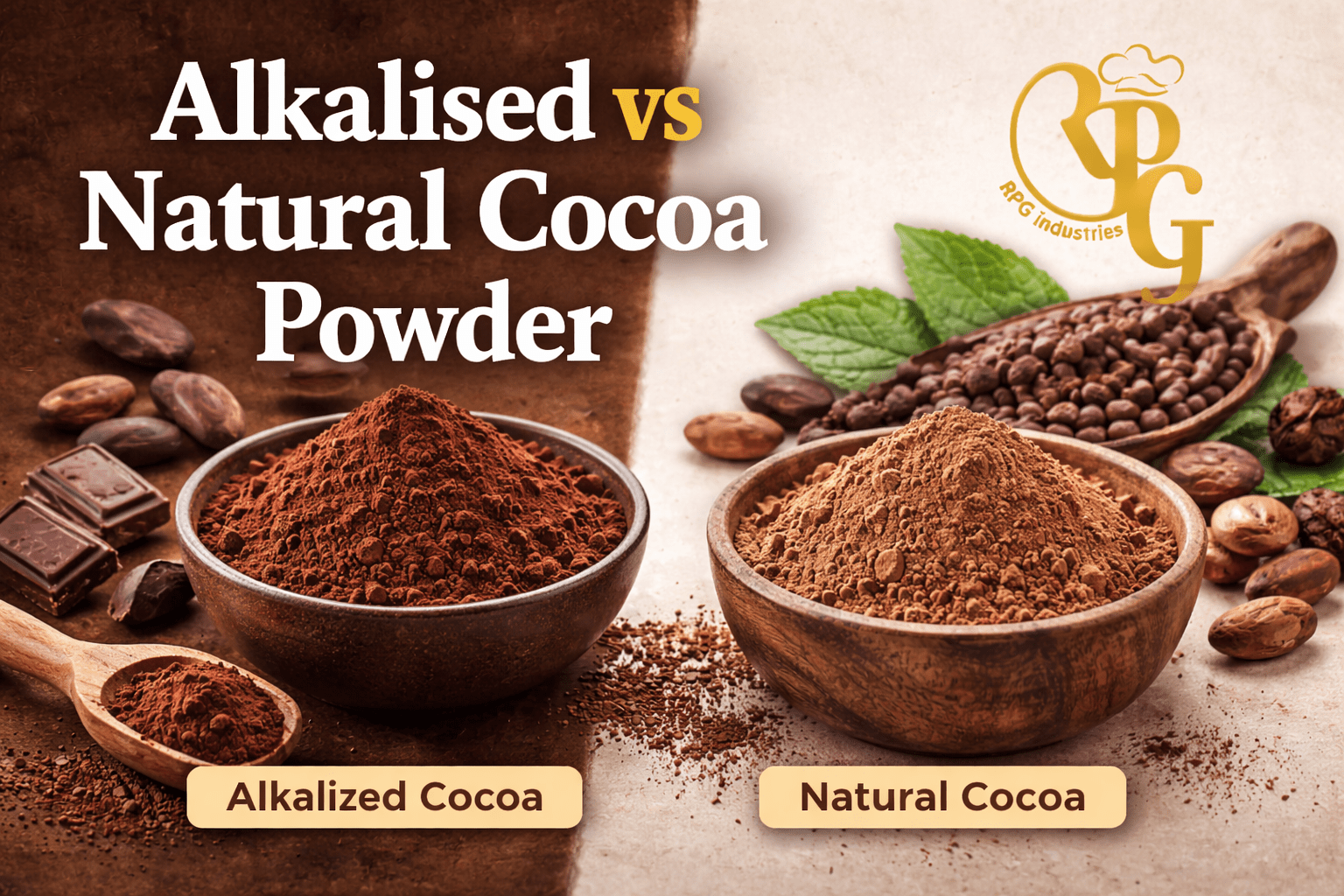

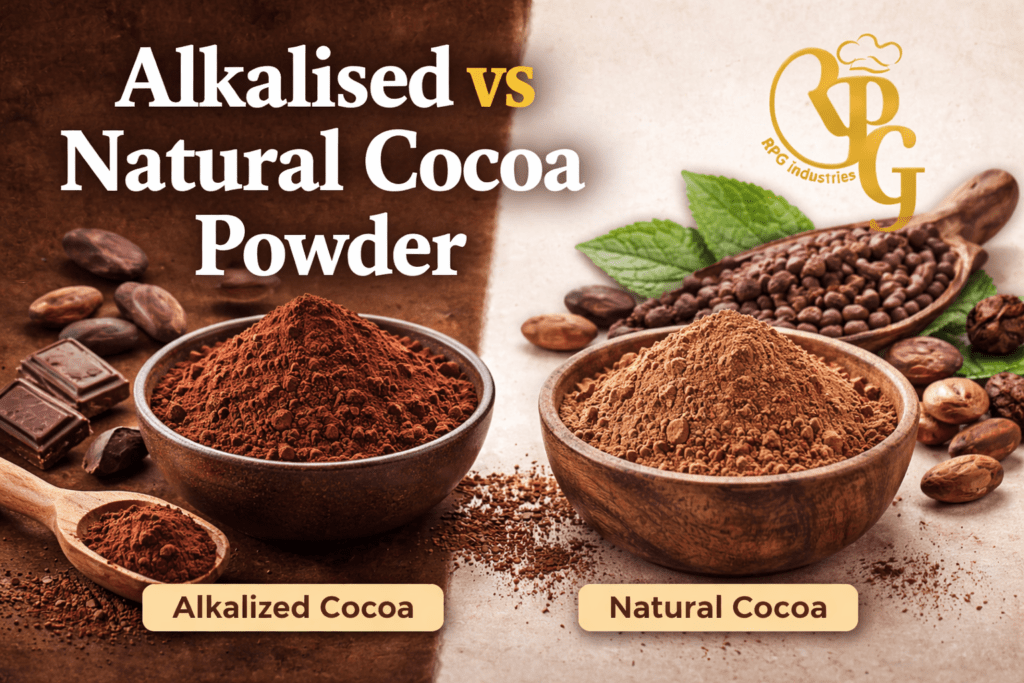
Alkalised vs Natural Cocoa Powder
Cocoa powder is one of the most essential ingredients used in cakes, brownies, cookies, beverages, desserts, and chocolate-based products. However, when professionals in the bakery and food industry select cocoa ingredients, they often ask a key question: Alkalised vs natural cocoa powder – what’s the difference and which one should you use?
Understanding the difference between natural and alkalised cocoa powder is important because each type behaves differently in baking and food production. Factors such as cocoa powder acidity, cocoa solids composition, flavor intensity, and pH level influence the final texture, color, and taste of food products.
RPG Industries is a trusted supplier of cocoa powder for bakery industry, ice-cream manufacturing, beverage production, and food manufacturers across India. With more than 25 years of expertise in chocolate ingredient manufacturing, the company provides reliable solutions for businesses that require bulk cocoa powder supplier for food industry.
This detailed guide explains:
- Alkalised vs natural cocoa powder
- Dutch process cocoa powder vs natural cocoa
- How the cocoa powder alkalization process works
- Which cocoa powder is best for baking
- Cocoa powder uses in bakery and food manufacturing
What is Cocoa Powder?
Cocoa powder is produced from cocoa beans, which undergo several stages of cocoa bean processing and cocoa processing.
The basic process includes:
- harvesting cocoa beans
- fermenting and drying
- roasting the beans
- extracting cocoa butter
- grinding remaining solids into powder
The resulting powder contains cocoa solids, which deliver the rich chocolate flavor used in desserts, baked goods, beverages, and confectionery products.
However, depending on the cocoa powder processing method, two main types of cocoa powder are produced:
- Natural cocoa powder
- Alkalised cocoa powder (Dutch processed cocoa powder)
These cocoa powder types differ in acidity, flavor, and applications.
Natural Cocoa Powder Explained
Natural cocoa powder is the purest form of cocoa powder produced from roasted cocoa beans without chemical processing.
Key characteristics of natural cocoa powder:
- retains natural cocoa acidity
- lighter brown color
- strong chocolate flavor intensity
- higher cocoa powder pH acidity
- commonly used in baking
Because natural cocoa powder is acidic, it reacts with baking soda, making it ideal for recipes such as:
- cakes
- brownies
- cookies
- chocolate muffins
Many bakers prefer natural cocoa powder for cakes, brownies, and cookies because it produces a deeper chocolate flavor.
Natural cocoa powder is also used in dessert manufacturing and beverage preparation, including chocolate syrups and drinking chocolate mixes.
What is Alkalised Cocoa Powder?
Alkalised cocoa powder, also known as Dutch process cocoa powder, is cocoa powder that has undergone a treatment known as the cocoa powder alkalization process.
During this process, cocoa is treated with alkaline salts to reduce acidity.
This process changes several characteristics of the cocoa powder:
- darker color
- smoother chocolate flavor
- reduced bitterness
- improved solubility
Because of these properties, alkalised cocoa powder is commonly used in:
- chocolate desserts
- ice-cream manufacturing
- beverage mixes
- chocolate sauces
- industrial food production
Many food manufacturers prefer alkalised cocoa powder for bakery manufacturers and beverage companies because it provides consistent color and flavor.
Alkalised vs Natural Cocoa Powder: Key Differences
Understanding natural cocoa powder vs dutch process cocoa powder helps manufacturers choose the right ingredient.
| Feature | Natural Cocoa Powder | Alkalised Cocoa Powder |
| Acidity | High acidity | Low acidity |
| Color | Light brown | Dark brown |
| Flavor | Strong chocolate flavor | Smooth chocolate flavor |
| Processing | Minimal processing | Cocoa powder alkalization process |
| Best Use | Cakes, brownies, cookies | Desserts, beverages, ice cream |
This comparison explains the difference between natural and alkalised cocoa powder clearly.
How Cocoa Powder Affects Baking Results
The type of cocoa powder used can significantly impact baking results.
Natural Cocoa Powder in Baking
Because natural cocoa powder contains acidity, it reacts with baking soda to produce carbon dioxide.
This reaction helps baked goods rise and creates a lighter texture.
Recipes that often use natural cocoa powder for baking include:
- chocolate cakes
- brownies
- chocolate cookies
- chocolate muffins
Many traditional recipes specifically require natural cocoa powder vs dutch process cocoa powder because of this chemical reaction.
Alkalised Cocoa Powder in Baking
Alkalised cocoa powder has lower acidity and does not react strongly with baking soda.
Instead, it is commonly used with baking powder.
This cocoa powder type provides:
- smoother chocolate flavor
- darker color
- improved mixing properties
Because of these benefits, dutch processed cocoa powder is widely used in commercial dessert production.
Which Cocoa Powder is Best for Baking?
Many people ask: Which cocoa powder is best for baking?
The answer depends on the recipe.
Use Natural Cocoa Powder When
- baking cakes with baking soda
- making brownies and cookies
- stronger chocolate flavor is desired
Use Alkalised Cocoa Powder When
- making chocolate beverages
- producing desserts and ice creams
- achieving darker chocolate color
- creating mild chocolate flavor
Professional bakeries often use both cocoa powder types for different products.
Cocoa Powder Applications in the Food Industry
Cocoa powder is a versatile ingredient used across many sectors of the food industry.
Bakery Production
Cocoa powder is commonly used for:
- cakes
- brownies
- cookies
- pastries
- chocolate fillings
These applications make cocoa powder for bakery industry one of the most demanded ingredients.
Beverage Manufacturing
Cocoa powder is used in:
- hot chocolate drinks
- chocolate milk
- beverage mixes
In these cases, alkalised cocoa powder is often preferred due to its smooth flavor and easy mixing.
Ice Cream Production
Cocoa powder is also widely used in ice-cream manufacturing, where it adds chocolate flavor and color.
Food manufacturers often choose industrial cocoa powder for food manufacturers for consistent results.
Confectionery and Dessert Manufacturing
Cocoa powder is an essential chocolate ingredient manufacturing component used in:
- chocolate fillings
- chocolate spreads
- dessert toppings
- confectionery products
Choosing a Reliable Cocoa Powder Supplier
Food manufacturers require a bulk cocoa powder supplier for food industry that can provide consistent ingredient quality.
Important factors when selecting a supplier include:
- consistent cocoa solids composition
- reliable supply chain
- standardized manufacturing
- food safety compliance
Working with an experienced cocoa powder manufacturer in India ensures stable production for bakeries and food brands.
Cocoa Powder Supplier for Bakery Manufacturers
RPG Industries supplies cocoa powder for bakery manufacturers, ice cream producers, and food processing companies.
The company offers high-quality ingredients designed for commercial production.
Products supplied include:
- cocoa powder
- choco paste
- chocolate dressing
- bakery ingredients
Explore related ingredients:
- Choco Paste for Bakery Manufacturers
- Cocoa Powder Manufacturer
- Baking Powder for Bakery Production
- Corn Flour Powder for Baking Industry
These ingredients support the production of cakes, brownies, cookies, desserts, and chocolate beverages.
Why Food Manufacturers Trust RPG Industries
With over 25 years of experience, RPG Industries has built a strong reputation in the food ingredient industry.
Reasons manufacturers choose the company include:
- consistent ingredient quality
- expertise in cocoa ingredient manufacturing
- reliable bulk supply
- support for bakery and food production
- pan-India distribution
This makes the company a trusted cocoa powder supplier for bakery industry and food manufacturers.
Growing Demand for Cocoa Powder in the Food Industry
The global demand for chocolate desserts and cocoa-based beverages continues to grow.
Major industry trends include:
- premium chocolate cakes
- gourmet brownies
- chocolate beverages
- chocolate ice creams
- dessert innovations
As these trends expand, the need for industrial cocoa powder supplier and chocolate ingredient manufacturers will continue to increase.
FAQs – Alkalised vs Natural Cocoa Powder
What is the difference between natural and alkalised cocoa powder?
Natural cocoa powder is acidic and has a strong chocolate flavor, while alkalised cocoa powder undergoes a treatment that reduces acidity and creates a smoother taste and darker color.
Which cocoa powder is better for baking?
Both types are useful. Natural cocoa powder works best with baking soda, while alkalised cocoa powder is better for recipes using baking powder.
What is Dutch process cocoa powder?
Dutch process cocoa powder is another name for alkalised cocoa powder that has been treated with an alkaline solution to reduce acidity.
Can alkalised cocoa powder replace natural cocoa powder?
In some recipes it can be substituted, but because the pH level and acidity differ, adjustments to leavening agents may be required.
What cocoa powder do bakeries use?
Bakeries use both natural and alkalised cocoa powder depending on the recipe, flavor profile, and baking requirements.





Leave a Reply